
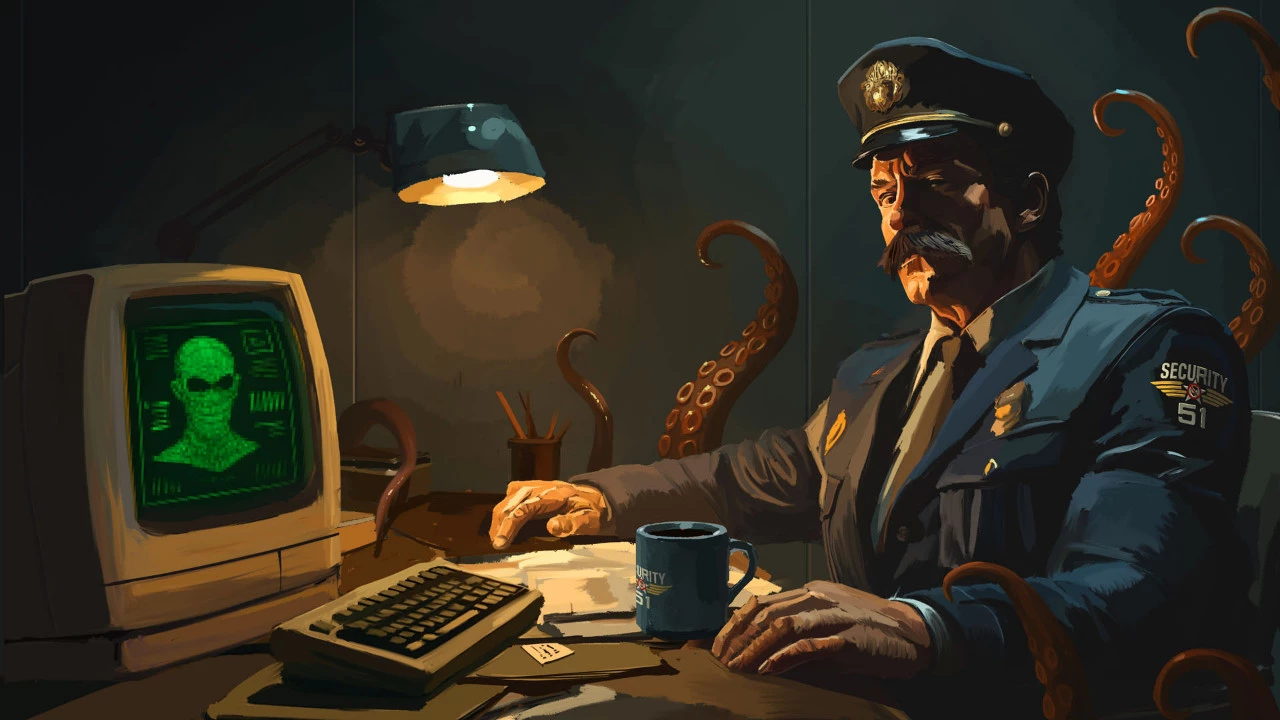
When you think of “Area 51,” your mind probably conjures images of a top-secret military installation, experiments on extraterrestrial beings, mysterious technologies, and shadowy government conspiracies. For decades, this remote Nevada facility has captured the public imagination, spawning countless movies, television shows, and conspiracy theories about what might really be going on behind those heavily guarded fences. However, the new game Security 51 offers players an entirely unexpected perspective on this legendary location — one that trades high-stakes action for something far more relatable: the mundane reality of bureaucratic employment.
Rather than casting players as elite soldiers or intrepid investigators uncovering cosmic secrets, Security 51 places you in the shoes of an ordinary security guard working the night shift at the world’s most famous classified facility. This clever premise subverts expectations from the very beginning, promising alien encounters and government secrets while delivering something far more grounded and surprisingly humorous. The game belongs to a growing genre of workplace simulation experiences that find entertainment value in the everyday tedium of employment, following in the footsteps of titles like Papers, Please and Unpacking.
A Workplace Simulator Unlike Any Other
Security 51 masterfully blends the extraordinary setting with extraordinarily ordinary gameplay mechanics. Players must navigate bureaucratic procedures, fill out incident reports, manage access credentials, and follow strict protocols — all while aliens casually wander the corridors and unexplained phenomena occur with alarming regularity. The genius of the game lies in how it normalizes the supernatural. Your character has likely been working this job long enough that a grey alien requesting a bathroom pass barely warrants a raised eyebrow. This juxtaposition creates a unique comedic atmosphere that feels fresh and innovative in the simulation genre.
The gameplay loop revolves around completing mundane security tasks while maintaining composure in increasingly bizarre situations. You might find yourself checking identification badges for visiting scientists, monitoring security cameras that occasionally capture inexplicable events, or escorting confused extraterrestrial visitors to their designated containment areas. The game’s dry humor emerges naturally from treating these outlandish scenarios with complete professional detachment, as if filing paperwork about a dimensional rift is just another Tuesday at the office.
The Cultural Legacy of Area 51
Security 51 draws from nearly eight decades of mythology surrounding the real Area 51, officially known as Groom Lake or Homey Airport. The facility was established in 1955 as a testing ground for experimental aircraft, most notably the U-2 spy plane. Its extreme secrecy, combined with numerous UFO sightings that were actually classified aircraft tests, created fertile ground for conspiracy theories. The 1947 Roswell incident, though occurring in New Mexico, became inextricably linked with Area 51 lore, with many believing recovered alien technology was transported there for study. The U.S. government only officially acknowledged the base’s existence in 2013, further fueling public fascination.
This rich cultural backdrop provides Security 51 with an endless well of material to draw from. The developers clearly understand their source material, incorporating references to famous conspiracy theories while maintaining their satirical tone. From the infamous “grey aliens” of abduction lore to mysterious Men in Black figures, the game populates its world with recognizable elements of UFO mythology, all filtered through the lens of workplace comedy. This approach allows both skeptics and believers to enjoy the experience, as the game neither confirms nor denies anything while poking fun at everyone.
Redefining the Simulation Genre
Security 51 represents a broader trend in gaming toward finding entertainment in unexpected places. The simulation genre has evolved dramatically from its flight simulator origins, now encompassing everything from goat chaos to pressure washing. What makes Security 51 stand out is its combination of an inherently fascinating setting with deliberately anticlimactic gameplay. Players expecting jump scares or action sequences will instead find spreadsheets to complete and schedules to maintain. This subversion of expectations becomes the entertainment itself, as the absurdity of the mundane slowly reveals itself against such an extraordinary backdrop.
The game’s visual and audio design reinforces this atmosphere of routine supernatural employment. Fluorescent lighting flickers, coffee machines gurgle, and office equipment hums — all perfectly normal sounds for a night shift, except when accompanied by distant alien communications and the occasional containment breach alarm. The attention to detail in creating an authentic workplace environment makes the intrusion of the extraordinary all the more effective and amusing.
Expert Opinion: Security 51 represents an innovative evolution in workplace simulation games, successfully merging conspiracy culture with mundane employment humor. This unique approach could spark a new subgenre of games that find comedy in normalizing the extraordinary. Industry observers should watch for similar titles that subvert player expectations by combining fantastical settings with deliberately anticlimactic gameplay mechanics.