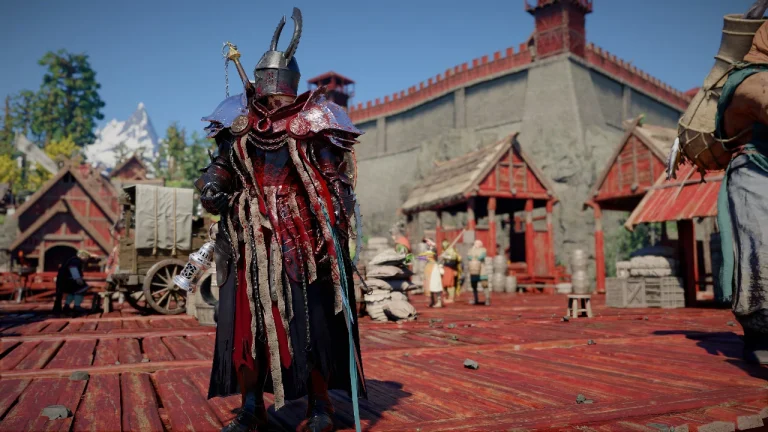

Panache Digital Games has officially announced the early access release of their long-awaited mystical action game 1666: Amsterdam. The title, which has been in development for over a decade with a tumultuous history, finally allows players to explore the dark streets of 17th-century Amsterdam. However, initial player feedback suggests that while the game shows significant promise, potential buyers might want to wait for further updates before diving in.
A Decade-Long Journey to Release
The story behind 1666: Amsterdam is almost as dramatic as the game itself. Originally conceived by Patrice Désilets, the creative mind behind the original Assassin’s Creed games and Prince of Persia: The Sands of Time, the project began development at THQ Montreal back in 2012. When THQ went bankrupt, the project was acquired by Ubisoft, but after Désilets departed the company under contentious circumstances, legal battles ensued over the ownership of the intellectual property. After years of litigation, Désilets finally regained the rights to his creation and founded Panache Digital Games to bring his vision to life.
This troubled development history has created enormous anticipation among fans who have followed the project’s saga. The game promises a unique blend of action gameplay set against the backdrop of the Dutch Golden Age, a period rarely explored in video games. Players take on the role of a character navigating the mystical and supernatural elements that plagued 17th-century Europe during a time of religious conflict, scientific discovery, and rampant superstition.
Current State and Player Reception
Early access reviews paint a picture of a game with tremendous potential that currently suffers from typical early development issues. Players who have purchased and tested the game report that the core gameplay mechanics show promise, with atmospheric environments that successfully capture the eerie mood of plague-era Amsterdam. The supernatural elements, which appear to draw inspiration from historical witch trials and demonic folklore of the period, create a compelling narrative framework that distinguishes the title from other action games on the market.
However, the consensus among the gaming community is that 1666: Amsterdam requires substantial polish before it can be fully recommended. Players have noted various technical issues, including performance problems, bugs, and incomplete features that are common in early access releases. The combat system, while showing flashes of the fluid mechanics Désilets is known for from his Assassin’s Creed days, reportedly needs additional refinement. Many reviewers emphasize that the foundation is solid, but the execution needs more time in the development oven.
Historical Setting and Gameplay Elements
The year 1666 holds particular significance in European history and superstition. Known as the “Year of the Beast” due to the number 666’s biblical associations, this period saw numerous catastrophic events including the Great Fire of London and continued outbreaks of the bubonic plague across Europe. Amsterdam during this era was one of the world’s wealthiest and most cosmopolitan cities, serving as a center of trade, art, and intellectual pursuit, while simultaneously being gripped by religious fervor and fear of the supernatural.
Panache Digital Games appears to be leveraging this rich historical tapestry to create an immersive experience that blends historical accuracy with supernatural fiction. The Dutch Golden Age setting offers unique architectural environments, from narrow canal houses to grand merchant estates, providing diverse gameplay spaces. The team has indicated that players will encounter various historical elements woven into the supernatural narrative, creating an experience that educates while entertaining.
Looking Forward
For those interested in 1666: Amsterdam, the current recommendation from the player community is patience. Early access games frequently undergo significant transformations during their development cycle, and Panache Digital Games has expressed commitment to working closely with the community to improve the experience. The studio plans regular updates and has outlined a roadmap for addressing the current issues while expanding the game’s content.
The gaming industry has seen numerous early access success stories where initial rough releases transformed into polished final products through iterative development and community feedback. Given Désilets’ proven track record and the unique nature of 1666: Amsterdam’s setting and concept, many observers remain optimistic about the game’s future. For now, interested players face a choice between supporting the development early and accepting current limitations, or waiting for a more complete experience down the line.
Expert Opinion: Given Patrice Désilets’ impressive pedigree in action-adventure game design, 1666: Amsterdam has the potential to become a standout title once it reaches full release. The unique historical setting and supernatural elements offer something genuinely different in a crowded market. However, early access purchasers should approach with tempered expectations, as the game likely requires 6-12 months of additional development to reach the polish level expected of a title from a veteran designer of this caliber.